
History
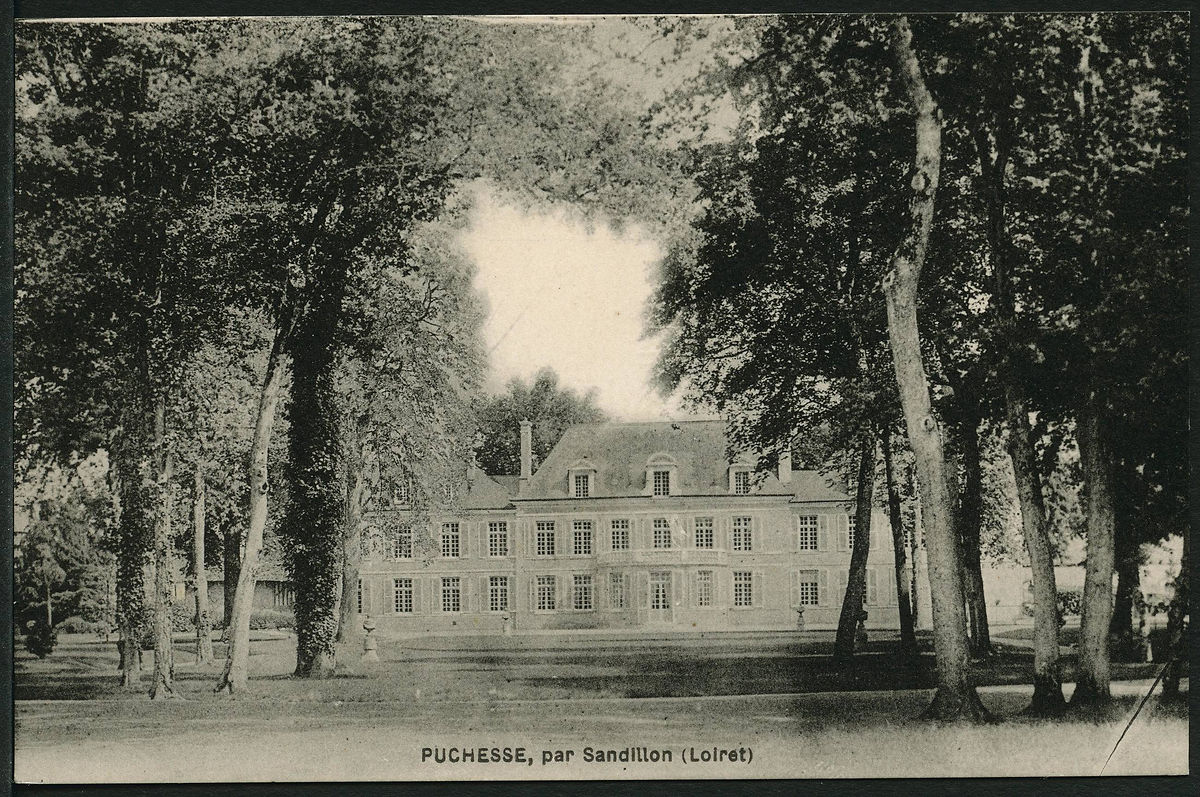

1700 -
The Puchesse estate, bordered by the Loire, belonged in the 18th century to the prominent Orléans family Colas des Francs. In 1720, Robert Colas des Francs purchased the land and lordship of Grand-Puchesse from Sieur Sergent, who had held it since 1709 from Sieur Boyetet de Mérouville. His daughter Marie-Madeleine Colas des Francs, Lady of Puchesse, married Gabriel Baguenault in 1723, who thereby became Lord of Puchesse. He served as mayor of Orléans from 1748 to 1750.
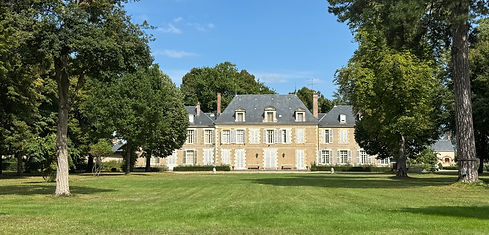
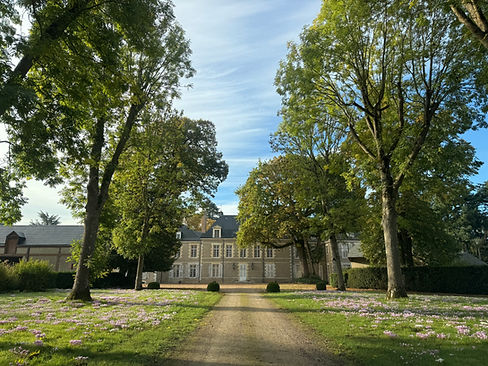
The current château was rebuilt in the 19th century: classical in style featuring a main square-storey level and an attic floor. The central building is flanked by two symmetrical wings and the Domaine comprises a stable block, pigeonnier, and three additional outbuildings previously serving as staff quarters, and a chapel built in 1813.

1910
In 1910, the Château de Puchesse was owned by Gustave Baguenault de Puchesse , Comte (1843–1922), Mayor of Sandillon from 1900 until his death, president of the Archaeological and Historical Society of the Orléanais, correspondent of the Institut and author of numerous works on 16th century France.


1920 -
In the 1920s, the château entered a new chapter of refinement and renewal. During this period, thoughtful renovations enhanced both the elegance of the grounds and the character of the building itself. The gardens were reshaped to reflect the evolving tastes of the era, creating the graceful landscape that welcomes guests today. Architectural updates included the addition of charming dormer windows, bringing more light into the upper rooms and adding dimension to the roofline.
Historic photographs from the decade also reveal subtle yet meaningful changes — among them the removal of the original zinc roof ornamentation, and the removal or repositioning of doors and windows.
1980 -
In the 1980s and 1990s, the Château entered another period of thoughtful transformation, balancing preservation with modern comfort. During these decades, the semi-circular salon and its accompanying balcony in the central wing were removed, subtly reshaping the building’s profile and interior flow.
A new chapter of leisure was added with the creation of a pool house within the former stable block — a graceful adaptation that honored the estate’s equestrian past while embracing contemporary living. At the same time, the roof was carefully restored, safeguarding the Château’s architectural integrity for generations to come.
These late 20th-century updates reflected a continued commitment to stewardship, ensuring the Château remains both historically resonant and warmly welcoming.
2025 -
The Château and its grounds were sold in 2025 to an international family who have become the proud new custodians of this historic property. Their mission is to continue lovingly restoring and preserving the heritage of the Domaine for future generations.The Château officially opened its doors as a Guest House in 2026.